Quick Breakdown:
- Schengen Area: A free travel zone made up of 29 countries, meaning travellers can move between them without routine passport checks (though occasional border checks still occur).
- Schengen Visa: A tourist visa that allows you to visit all 29 countries that are part of the Schengen Area for 90 days within any 180-day period.
- European Countries not in Schengen Area: Have their own set of visa and border rules.
≡ Jump to a Section (Click):
Jump to a section
The Schengen Area
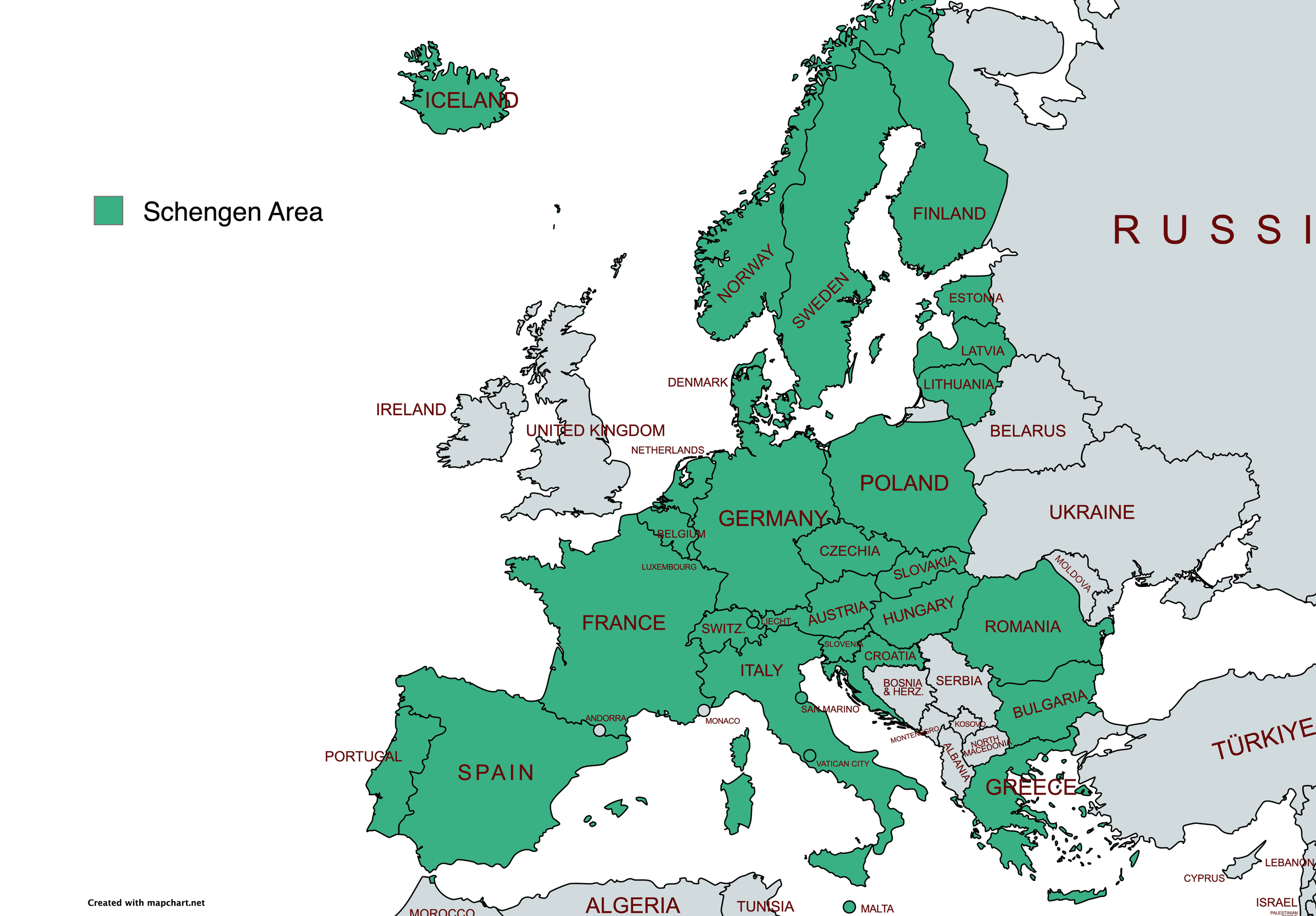
List of countries in the Schengen Area
Click to expand
- 🇦🇹 Austria
- 🇧🇪 Belgium
- 🇧🇬 Bulgaria
- 🇭🇷 Croatia
- 🇨🇿 Czechia (or Czech Republic)
- 🇩🇰 Denmark
- 🇪🇪 Estonia
- 🇫🇮 Finland
- 🇫🇷 France
- 🇩🇪 Germany
- 🇬🇷 Greece
- 🇭🇺 Hungary
- 🇮🇸 Iceland
- 🇮🇹 Italy
- 🇱🇻 Latvia
- 🇱🇮 Liechtenstein
- 🇱🇹 Lithuania
- 🇱🇺 Luxembourg
- 🇲🇹 Malta
- 🇳🇱 Netherlands
- 🇳🇴 Norway
- 🇵🇱 Poland
- 🇵🇹 Portugal
- 🇷🇴 Romania
- 🇸🇰 Slovakia
- 🇸🇮 Slovenia
- 🇪🇸 Spain
- 🇸🇪 Sweden
- 🇨🇭 Switzerland
A Quick Rundown:
The Schengen Area is the world’s largest free travel zone — and the reason you can backpack across most of Europe without showing your passport at every border.
It’s made up of 29 countries that have agreed to remove internal borders. This means travellers can move freely between Schengen countries without passport checks — as if you were travelling domestically.

Visa Rules:
One Schengen visa lets you visit all 29 member countries — you don’t need separate visas for each. Most Importantly: The 90-day rule – You can stay up to 90 days within any 180-day period across the entire Schengen Area.
When tracking your visa days, treat the entire Schengen Area as one country. There are usually no passport checks when crossing borders within the Schengen Area (e.g. flying from France to Italy or catching the train from Germany to Switzerland).
However, still always make sure you carry your passport when crossing borders because there is the occasional border control check. You can use the European Commission’s official short-stay calculator to calculate your remaining days.
What about the Micro-States?

There are 4 micro-states in Europe: Andorra, Monaco, San Marino and Vatican City.
Monaco, San Marino and Vatican City aren’t technically in the Schengen Area, however they are de-facto members meaning they still operate under the Schengen Area 90-day rule. Any day spent in these areas counts as a day towards your 90 days.
However, in Andorra, if you can get an exit stamp at the Spanish or French border, your Schengen 90-day count technically pauses. But you must get the stamp — without it, your days keep counting.
What Does This Mean for Countries not in the Schengen Area
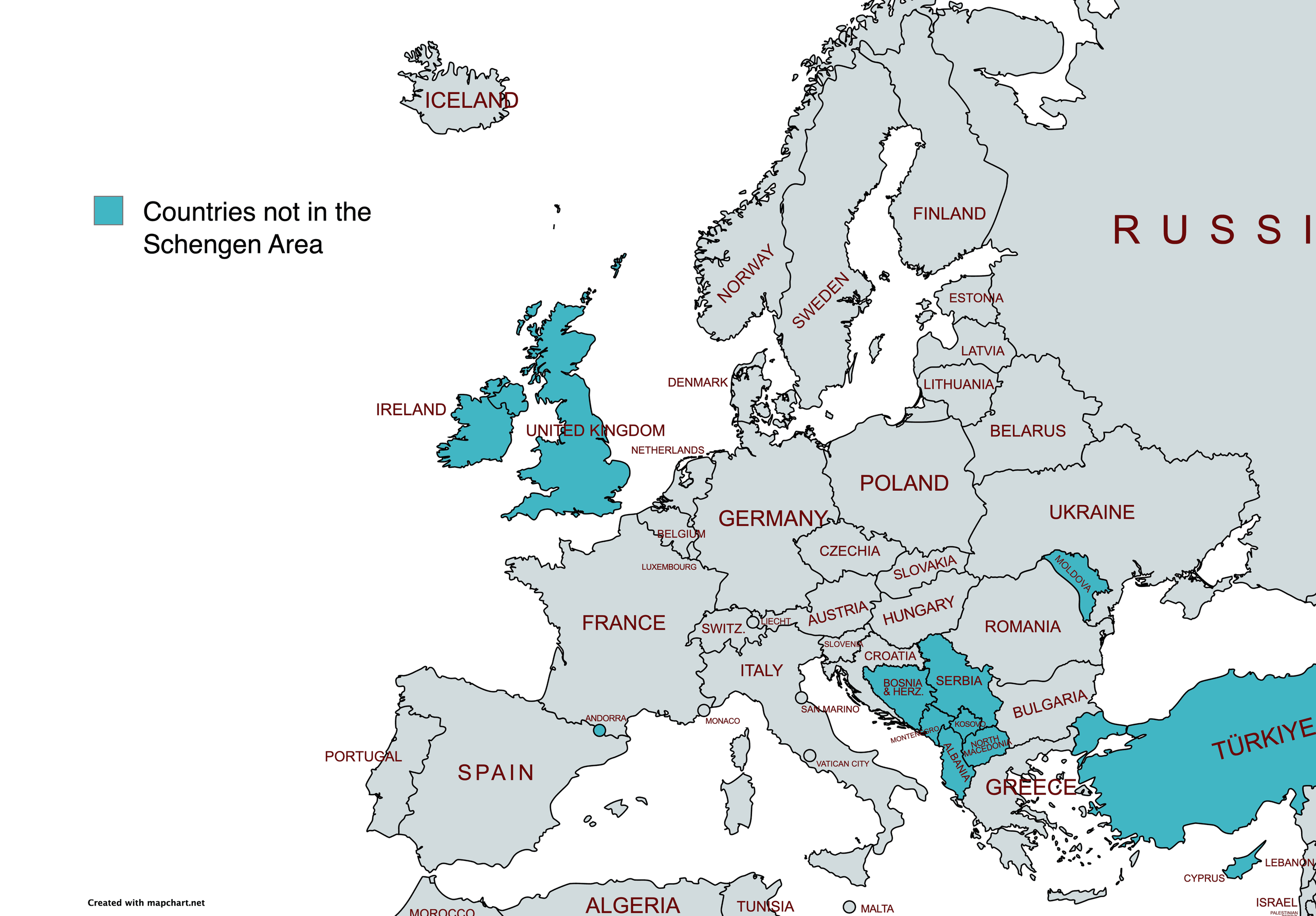
Countries not part of the Schengen Area:

Click to expand
- 🇦🇱Albania
- 🇦🇲 Armenia
- 🇦🇿 Azerbaijan
- 🇧🇦 Bosnia and Herzegovina
- 🇨🇾 Cyprus
- 🇬🇪 Georgia
- 🇮🇪 Ireland
- 🇽🇰 Kosovo
- 🇲🇩 Moldova
- 🇲🇪 Montenegro
- 🇲🇰 North Macedonia
- 🇷🇸 Serbia
- 🇹🇷 Turkey
- 🇺🇦 Ukraine
- 🇬🇧 United Kingdom
The cuntries not in the Schengen Area have their own border control and visa rules. You will always be stopped at border control when entering these countries. Most of these countries offer a similar arrangement: a 90-day tourist visa within a 180-day rolling period.
So if you want to stay in Europe for longer than 90 days, you technically can. For example, you could spend 90 days in the Schengen Area, travel to a non-Schengen country (like the UK, Turkey, or the Balkans) for 90 or more days, and then return to the Schengen Area for another 90 days.
Frequently Asked Questions
It depends on your nationality. Citizens of countries like Australia, the USA, Canada, the UK, New Zealand, and Japan can enter the Schengen Area visa-free for up to 90 days within any 180-day period. Citizens of other countries may need to apply for a Schengen visa in advance. Check your country’s specific requirements before booking.
The Schengen Area’s 90/180 rule means you can stay for a maximum of 90 days within any rolling 180-day window across all 29 Schengen countries combined. Once your 90 days are up, you must leave the Schengen Area and wait until enough days have passed in the 180-day window before you can re-enter.
Overstaying can result in fines, deportation, and a ban on re-entering the Schengen Area — typically ranging from 1 to 5 years depending on the country and how long you overstayed. Border officers check your passport stamps on exit, so it’s very likely to be caught. Always track your days carefully.
Yes. The 90-day rule only applies to the Schengen Area. Countries outside the Schengen Area (such as the UK, Turkey, the Balkans, and Ireland) have their own separate visa rules. You can spend 90 days in the Schengen Area, travel to a non-Schengen country, and then return to the Schengen Area once your 180-day window has reset.
No. It has its own visa and border rules. Many nationalities can visit the UK with an ETA for up to 6 months as a tourist, but this is completely separate from your Schengen visa days.
The EU (European Union) is a political and economic partnership between 27 countries. The Schengen Area is a free travel zone of 29 countries that have agreed to remove internal border controls. Not all EU countries are part of the Schengen area and vice versa