TL;DR — The Quick Version
Mobile Data: Get a Europe regional eSIM before you leave. Ubigi is cheapest, Airalo covers the most countries, Saily is best for security.
International Card: Get a Wise card — it uses the real exchange rate with no hidden fees, and works everywhere in Europe.
Scams: Keep your phone out of your back pocket, backpack on front in crowds, ignore beggars. Use ATMs from major banks only.
Eating Cheap: Download Too Good To Go for €3–6 surprise bags. Hit supermarkets and local bakeries. Skip McDonald’s — local kebab/burger shops are the same price and way better.
Packing: Take a backpack, not a suitcase. Bring a Type C adapter (or universal if visiting the UK). Leave space for shopping.
Saving Money: A 3-week trip can cost under €1,500. Work extra shifts, sell unused stuff, set up an auto-save “Europe Fund.”
≡ Jump To a Section (Click):
Connecting to Mobile Data
The easiest way to stay connected while travelling Europe is through travel eSIMs. If you’re looking for smart travel tips to save money and stay online across Europe, an eSIM is the way to go — they’re super easy to download, simple to set up, and relatively cheap.
When I travel to Europe, I always get a Europe regional e-sim — This means I get coverage in most European countries (always check the countries covered in your plan before buying).
You can get country specific e-sims, but unless you are spending the majority of your time in just one country – which you probably aren’t because Europe is small – I wouldn’t recommend getting a one country e-sim.
How Much Data Do You Actually Need for Europe?
How much data you really need depends on how much you use your phone.
If you’re someone who keeps mobile data on all the time, I’d recommend getting at least 10 GB for a 3-week trip.
If you are someone who doesn’t use their phone much when not connected to wifi – only using it when needed (e.g. checking messages/using maps) – then I would get half of that, so about 5GB.
The two main apps that use the most data when you travel are typically Chrome/Google and Google Maps. Google Maps especially chews through your data pretty quickly if you are not careful. If you are also someone who spends lots of time on social media, your data usage can rise pretty quickly.
At the end of the day, it all depends on how much you use your phone — which only you know best.
My Top 3 E-sim Providers
My top 3 e-sim providers I would recommend for Europe are: Saily, Airalo and Ubigi.
Airalo:
Ubigi:
Saily:
- Coverage in 35 countries
- Easy set up
- Enhanced security features (web protection, ad blocker)
Comparisons Price Table
| Data | Validity | Airalo(EUR €) | Ubigi(EUR €) | Saily(USD $) |
|---|---|---|---|---|
| Small Plans (≤5 GB) | ||||
| 500MB | 2 days | — | €2.00 | — |
| 1GB | 3 days | €4.50 | — | — |
| 1GB | 7 days | — | — | US$4.99 |
| 3GB | 7 days | €11.50 | — | — |
| 3GB | 30 days | — | €7.00 | US$12.49 |
| 5GB | 7 days | €16.50 | — | — |
| 5GB | 30 days | — | — | US$19.49 |
| Medium Plans (10–25 GB) | ||||
| 10GB | 7 days | — | €12.00 | — |
| 10GB | 15 days | €31.00 | — | — |
| 10GB | 30 days | €32.50 | €16.00 | US$35.99 |
| 20GB | 30 days | €43.00 | — | — |
| 25GB | 30 days | — | €32.00 | — |
| Large Plans (50 GB) | ||||
| 50GB | 30 days | — | €59.00 | — |
| 50GB | 90 days | €87.50 | — | US$95.99 |
| Unlimited Plans | ||||
| Unlimited | 7 days | €24.00 | €26.00 | US$28.99 |
| Unlimited | 15 days | €43.00 | €44.00 | US$49.99 |
| Unlimited | 30 days | €63.50 | €69.00 | US$71.99 |
Unlimited Data - Holafly
| Data | Validity | Price(EUR €) |
|---|---|---|
| Unlimited | 7 days | €26.90 |
| Unlimited | 15 days | €46.90 |
| Unlimited | 30 days | €68.90 |
| Unlimited | 60 days | €98.90 |
| Unlimited | 90 days | €128.90 |
If you are someone who likes to always have their data on and are constantly checking their phone, then I recommend getting an unlimited data plan. All three of the above recommended providers offer unlimited plans, but if you want a plan that you can use on the exact amount of your travel days, I recommend Holafly.
Holafly only offers unlimited data plans. However, it allows you to choose the exact days you need data for, so not a day goes wasted. The more days you need the plan, the cheaper the per day cost..
What Would I Do?
If you are planning on travelling just around the EU and the UK, then I would recommend buying a plan with Ubigi. They offer the cheapest prices out of the three and have great coverage.
If you are planning to travel to countries not in the EU (in particular Eastern Europe), I would recommend getting an Airalo plan as it offers coverage to the most countries.
If your biggest concern is security, then Saily is the way to go. Saily was created by the same people behind NordVPN - which is a great VPN - so if security is a concern for you, Saily is the way to go. It also offers the cheapest 30 day unlimited data plan.
👉 Got your data sorted? The next thing you need to figure out is how to get around. Check out my complete guide: How to Travel Europe by Train and Bus.
Get an International Bank Card ~ Wise
*This is not a promotion, only a personal suggestion
Many big banks around the world charge enormous international transaction fees and use terrible exchange rates when converting currencies. The solution to combat this... Wise.
It's a multi-currency debit card linked to a digital account that lets you hold, convert, and spend in over 40 currencies — perfect for hopping between countries with different currencies.
Wise uses the mid-market exchange rate (the real rate you see on Google) with only a small, transparent conversion fee — typically around 0.35–0.5% for major currencies like euros or pounds. There are no hidden transaction fees, so you know exactly what you're being charged and at what exchange rate.
Signing up takes 5 minutes and can easily be done on the Wise app or website.
If you want to see exactly the fees you will pay when you convert currencies, visit: https://wise.com/pricing/card-fees
Why is Wise Better Than Revolut?
The answer... the mid-market exchange rate. Wise always uses the mid-market exchange rate, regardless of the day or time. In addition, Wise gives you access to all features without paying any extra fees. With Revolut, there are multiple paid tiers, and to get the most out of it, you have to buy a monthly subscription.
How to Avoid Scams and Pickpockets in Europe
If you’re wondering how to avoid scams and pickpockets in Europe, the good news is: they’re not a big threat as long as you’re careful. That said, all year round - but especially in summer, pickpockets and scammers are active in big cities and major tourist hotspots across Europe.

My Tips:
- Don't ever give any money to people begging - no matter how sad the sign is.
- Beggars are sneaky, so never give them any attention - just keep walking.
- Keep your phone out of your back pocket.
- Always keep your phone in at the very least your side pocket.
- If your pockets are loose or small, then better putting it in your bag.
- Take your backpack off in crowded spaces
- If you are walking through super crowded streets or hopping on a super crowded train/bus/tram, always move your backpack to the front of your body.
- Pickpockets will target people wearing backpacks in crowded places.
ATMs
Another common concern for travellers are ATMs.
To avoid dodgy ATMs and excessive fees, only use ATMs run by the country’s major banks. These are usually found in enclosed areas or at the bank’s branch, and they’re always equipped with security cameras.
Even with your bank card, if it's a Mastercard/Visa, you should have no problem withdrawing cash — You will almost always be required to pay a small fee, (normally about €2 but can be up to €5).
How to Eat Cheap in Europe

Figuring out how to eat cheap in Europe is one of the biggest challenges for young budget travellers. Eating out every day adds up fast, but cooking in hostel kitchens can be stressful — they’re often busy and not the cleanest. Here are a few smart ways to eat well without blowing your budget.
Too Good To Go

This app is amazing and should be one of the first things you download before you even leave home.
Too Good To Go is a mobile app that helps reduce food waste by connecting you to restaurants, bakeries and supermarkets at the end of the day.
You can buy food at a super-discount, usually between €3-€6, and is essentially a surprise bag with all sorts of food goodies inside.
You simply search your current area for any stores offering "surprise bags" then you reserve the bag and pick it up at the times stated.
What you get is sometimes luck of the draw; however, if the store has solid reviews, you’re likely to score a great bag.
Here is a list of European countries that Too Good To Go is available in:
- France
- Germany
- Austria
- Switzerland
- UK
- Ireland
- Italy
- Spain
- Portugal
- Denmark
- Sweden
- Norway
- Poland
- Czech Republic
- Belgium
- Netherlands

Supermarkets/Bakeries
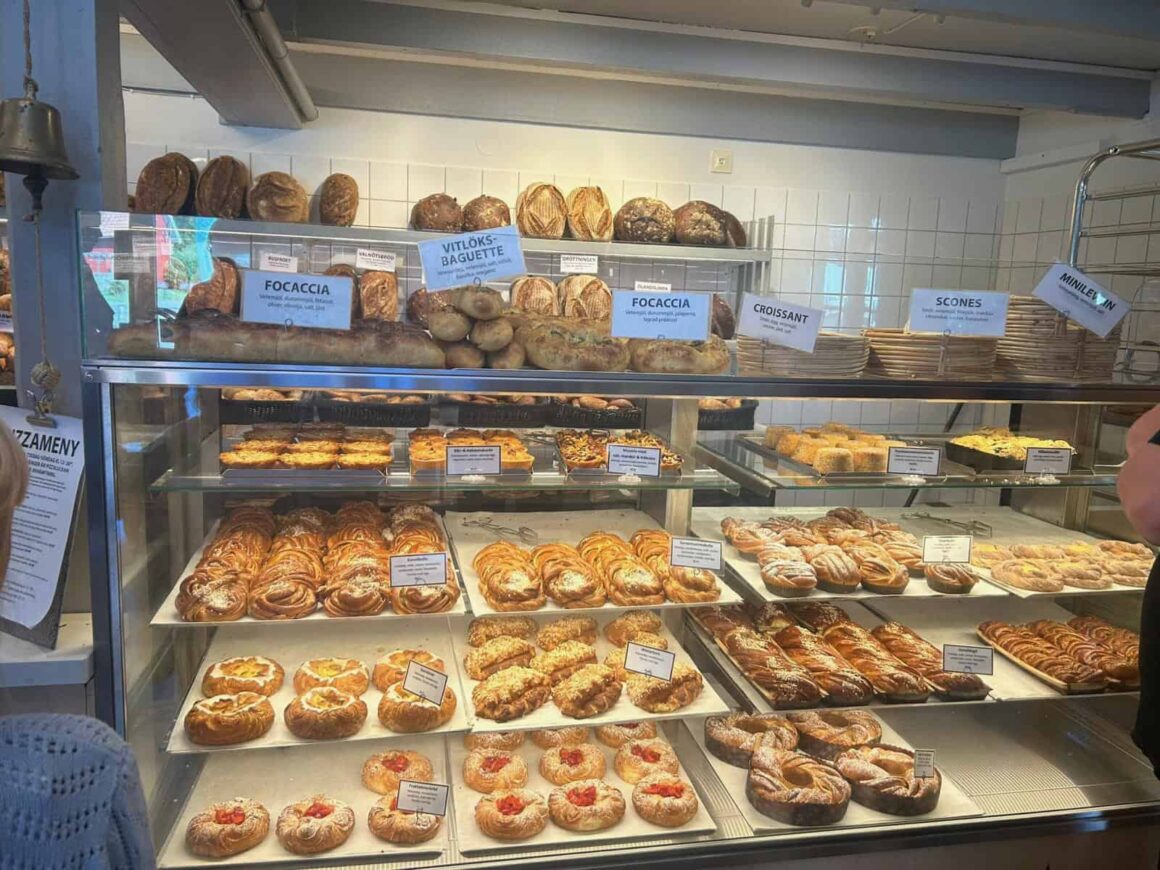
Supermarkets and Bakeries are also always a reliable and cheap option.
In supermarkets, you will find affordable salads, sandwiches and microwave meals.
It is still more expensive than cooking in your hostel, however if you don't want to hassle with cooking, getting ready prepared/microwave meals at the supermarket is a good cheap option.
I always find bakeries as good options for breakfast and lunch. There is always a wide selection of baked goods to fill you up at a very cheap price.
Local Fast Food
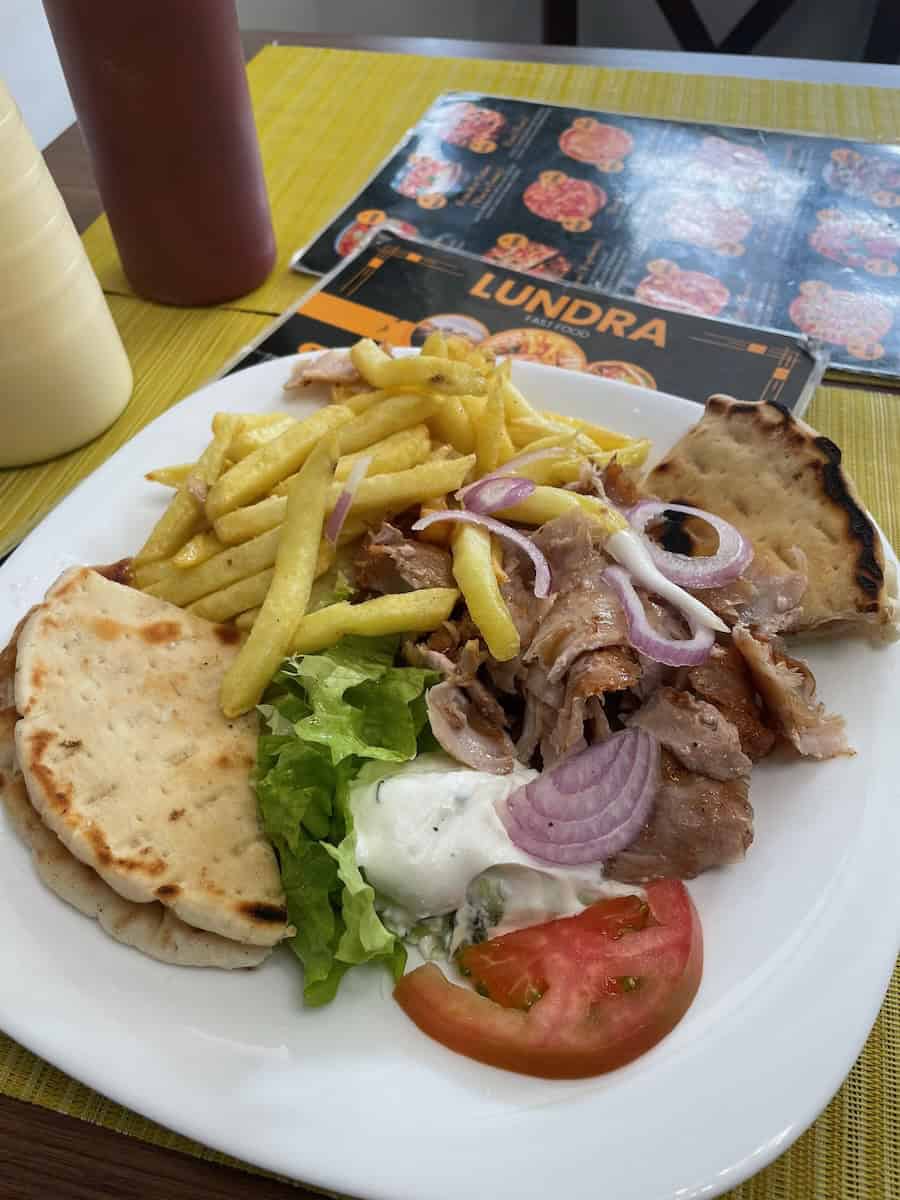
I always try and avoid the big fast food chains. In every city, there are cheap, local "fast food" shops that are similar prices to McDonald's, Burger King, KFC, and 100 times the quality.
Kebab shops, chicken shops, burger shops, there are always lots of cheap fast food options that are locally owned, and taste decent enough.
They may not offer the same convenience as big-chain fast food, but they’re definitely worth the extra effort.
ALWAYS TRY THE LOCAL CUISINE AT LEAST ONCE
When visiting a new city/country, it is always important to try the local cuisine at least once.
Every country in Europe - and even different areas within countries - have completely different foods. So it is a must to try at least once.
On top of that, eating at local restaurants supports the community — far better than funnelling your money into fast food chains.
I'm writing a full guide on how to find the best local restaurants in Europe — it's coming out soon! Follow me on Instagram (@go.look.outside) so you don't miss it.

Pack Smart
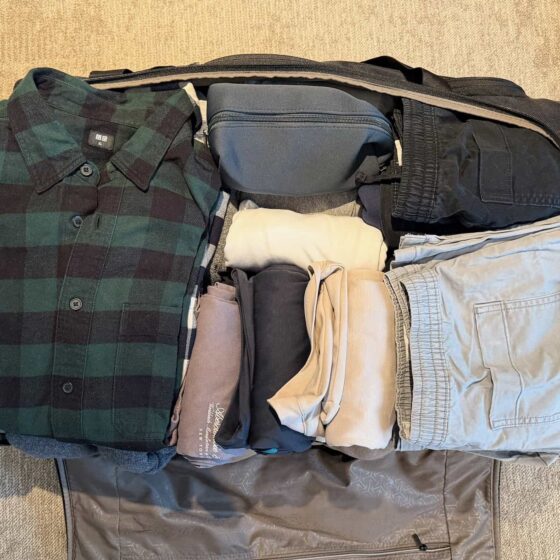
Knowing what to pack for a Europe trip can make or break your experience. European streets are narrow, steep, and often cobblestoned — and you’ll face plenty of flights of stairs. Whether you’re backpacking for a month or doing a quick two-week trip, here’s how to pack smart and travel light.
Take a Backpack
Suitcases are large, bulky and very much a pain in the ass to be rolling around the streets of big cities and small towns. They take up heaps of room, they're tough to carry, and can be extra heavy.
The solution to this... take a backpack. If you're planning on travelling for a longer period, a backpack is far easier to take around Europe than a suitcase.
You can find incredible travel backpacks without spending a fortune, and still fit everything you need inside.
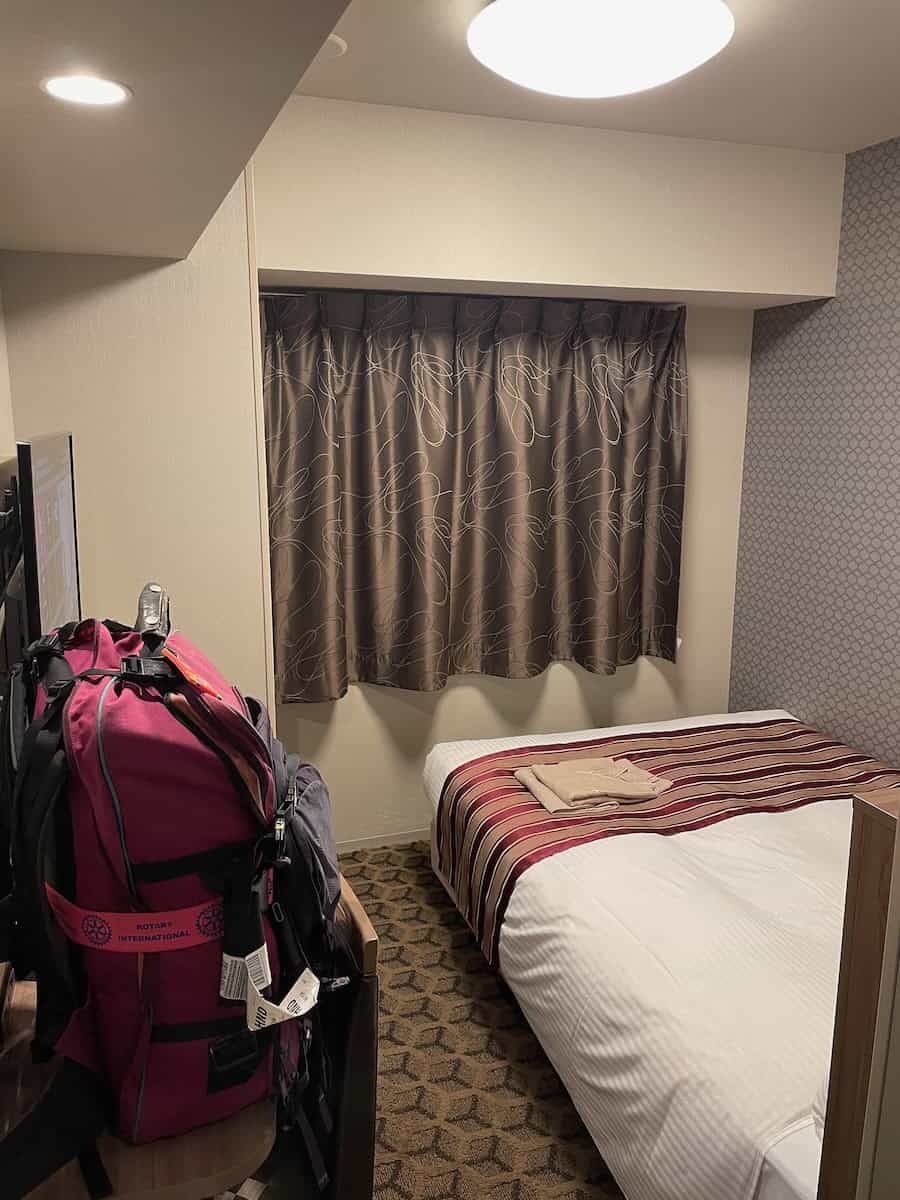
If You Still Want to Take a Suitcase
If you are still set on taking a suitcase though, don't worry. Just remember one thing: Before you leave, make sure you can carry your suitcase (lift it off the ground) without too much of a struggle. There will be times where I guarantee you will have to lift your suitcase up, and carry it.
Do You Like Shopping?
If you plan on going shopping (buying souvenirs, clothes, etc.) while you're in Europe, make sure you always leave space in your bag for those items.
I see it all the time — and I used to do it too — people packing their bags to the brim before they leave, with no room left to buy anything along the way.
Even if you’re not much of a shopper - I’m not - leave some space in your bag. You never know what kind of interesting goodies you may come across.
Travel Adapter
Make sure you take a travel adapter with you. Without a travel adapter, you will not be able to plug your phone, power banks, earphones in etc.
On Mainland Europe
For mainland Europe, all you need is a two pronged adapter (type c), that looks like this:
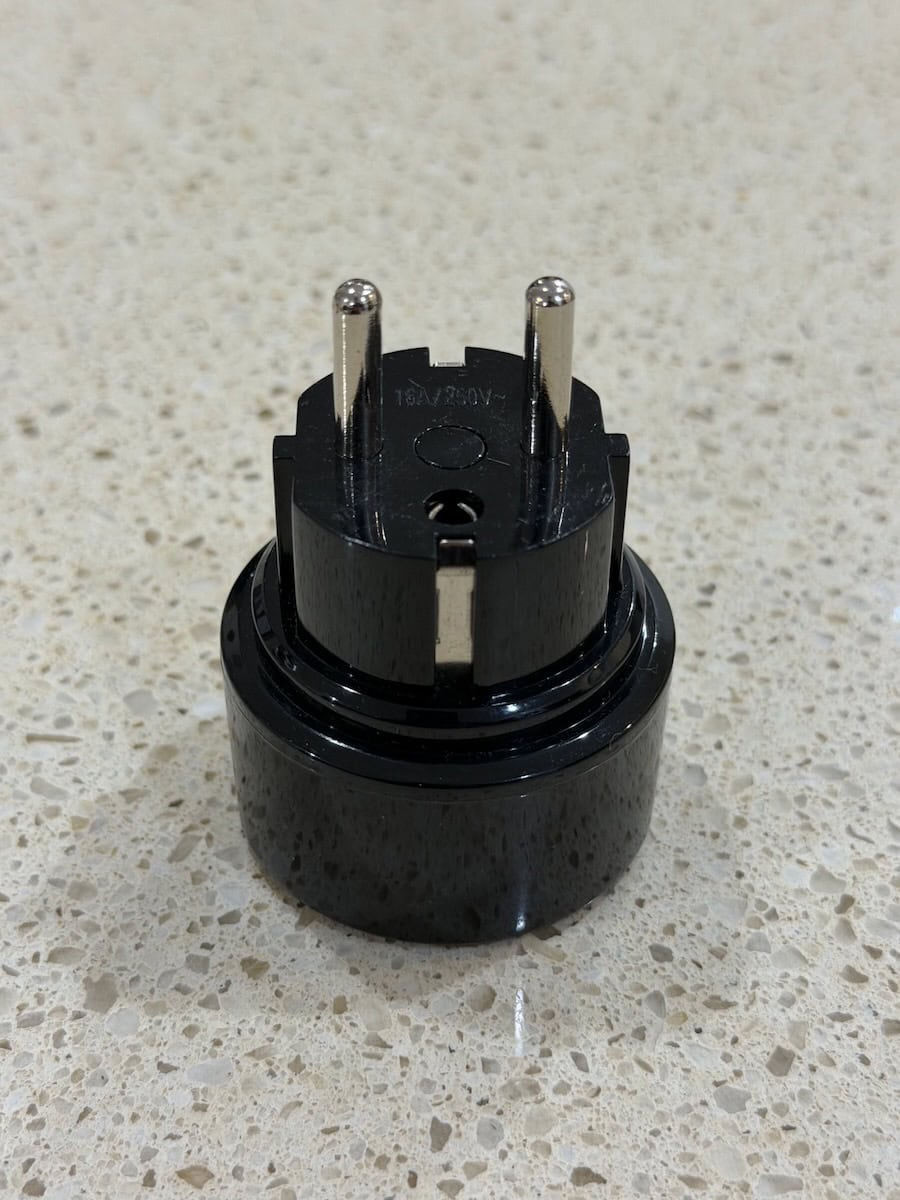
This will work in all countries across mainland Europe. The Swiss and Italian adapters are "technically different", but the two pronged adapters will work just fine.
In the UK and Ireland
If you are also planning on travelling to the UK and/or Ireland, I would recommend just getting a universal adapter. Something that looks like this:
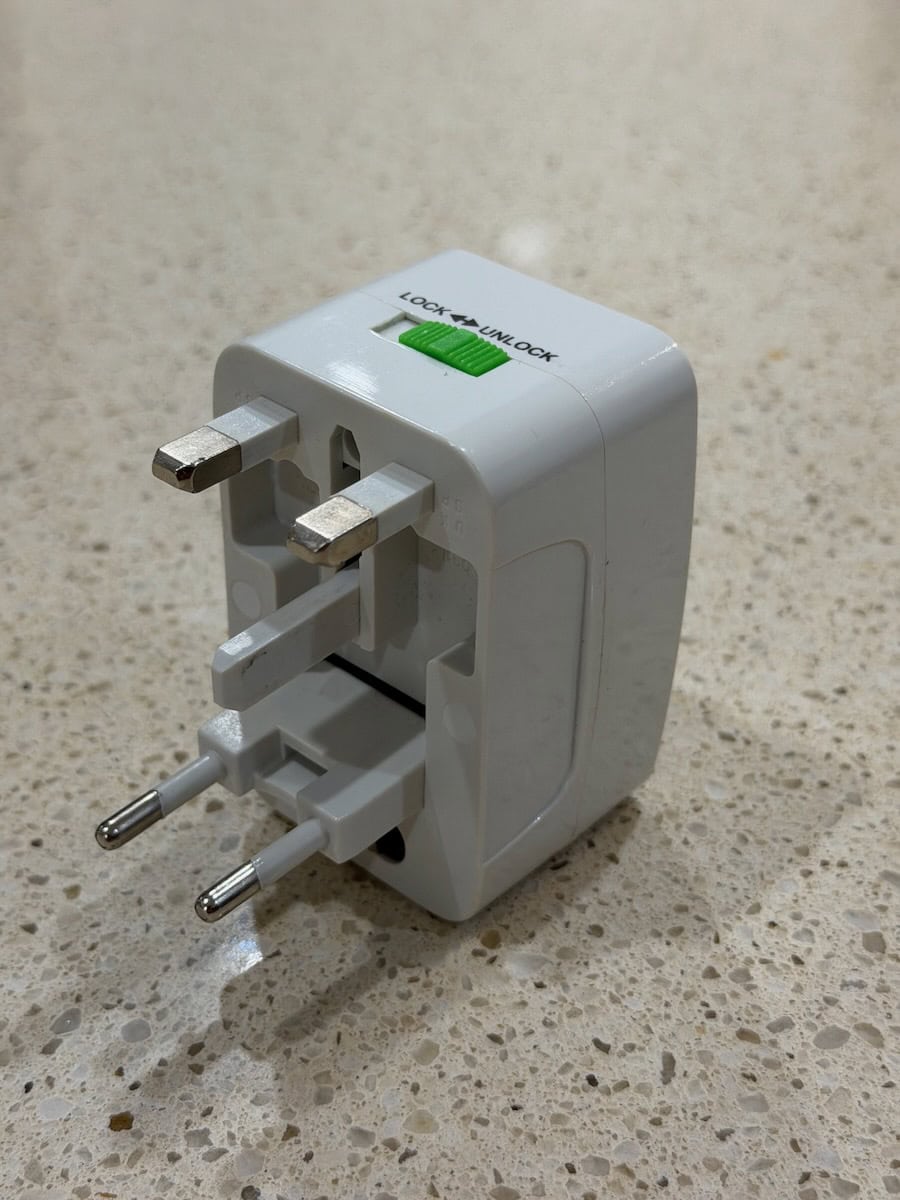
The UK and Ireland use a completely different adapter to the rest of Europe. They use what's called a type-g adapter. If you get a universal adapter, all the required plugs you need will be included.
For all the information you could possibly need on travel adapters, visit: https://www.worldstandards.eu/electricity/plugs-and-sockets/
Save Some Money
The truth is, travelling Europe on a budget is more achievable than most people think — especially if you’re young and flexible. You don’t need a fortune, but you do need a base level of savings before anything else.
There are plenty of different ways to save money. First is WORK.
- Take that extra shift
- Do some overtime
- Do some casual work

Especially if you're still living at home, you can save a solid amount in just a couple of months.
However, working isn't the only way to build your savings pool. A few small things can add up fast:
- Sell things you don't use anymore - clothes, tech, furniture.
- Set up a "Europe Fund" so savings happen without thinking.
- Try a "no-spend week" - where you only spend money on the essentials (rent, transport, groceries).
A three week Europe trip can easily be done for less than €1500 (flights excluded) — and sometimes less if you go to Eastern Europe.
To give you an idea:
If you save even just €150 per week, that's €1800 in just three months.
Frequently Asked Questions
Yes. Mainland Europe uses a Type C two-pronged adapter. The UK and Ireland use a different plug (Type G), so if you’re visiting both, grab a universal adapter before you leave.
It depends on your needs. Ubigi offers the cheapest prices with solid coverage across 37 countries. Airalo covers the most countries (42). Saily is best if security is your top priority. All three are easy to set up on your phone before you leave.
Too Good To Go is available in 16 European countries including France, Germany, Italy, Spain, the UK, and Scandinavia. It’s one of the easiest ways to eat well on a budget.
A three-week Europe trip can be done for under €1,500 (flights excluded), especially if you visit Eastern Europe, cook some meals, and use budget transport. Saving €150 per week gets you there in about three months.
Keep your phone out of your back pocket, move your backpack to the front of your body in crowded places, and never engage with street beggars or people trying to hand you things. Stick to ATMs run by major banks and avoid standalone machines in tourist areas.
Pack light — a backpack is far easier than a suitcase on Europe’s cobblestoned streets and stairs. Don’t forget a travel adapter (Type C for mainland Europe, or a universal adapter if visiting the UK too), and always leave space in your bag for things you’ll buy along the way.