For the condensed 5-minute-guide, head to — Quick Guide: How to Travel Europe by Train and Bus.
TL;DR — The Quick Version
Eurail Pass: Best for trips longer than 1 month, long distances (3+ hours), and stress-free flexibility. Youth discount (ages 12–27) gives you 25% off.
Individual Tickets: Cheapest option if you book 4–8 weeks ahead through national railway apps and stick to a fixed plan.
FlixBus/FlixTrain: Great for day trips, short distances, or when you want to save a Eurail travel day. Just be prepared for delays and less comfort.
Bottom line: If budget is everything and you’re organised, buy tickets separately. If you want freedom and less stress, get a Eurail pass.
≡ Jump To a Section (Click):
Taking Advantage of the Extensive European Transport Network

Travelling Europe by train and bus is one of the best – and cheapest – ways to see the continent.
Whether you’re backpacking on a gap year or planning budget train travel across Europe, the continent’s extensive high-speed rail network connects 12 countries, stretching as far north as Sweden and as far south as southern Italy.
Beyond this, almost every European country (aside from South-Eastern Europe) also has a well-developed national rail system, making train travel one of the easiest ways to get around the continent.
However, access to these fast and convenient rail services can be expensive.
Fortunately, there are several ways to take advantage of the network without going over your travel budget.
If you’re still figuring out where to go, check out my guide: When and Where to Travel Europe: A Complete Guide for Young Travellers 2026.
Quick Comparison Table
| Options | Best For | Pros | Cons |
|---|---|---|---|
| Eurail Pass | – Long distance travel (3+ hours) – When visiting countries with expensive rail | – Super flexible | – Can be expensive |
| Separate Train Tickets | – Fixed itineraries – Short distances between stops (<3 hours) | – Cheap if booked in advance | – No flexibility |
| Buses | – Budget Travel | – Super cheap | – Slow, often delayed |
Eurail
Jump to a Section:

The Eurail Pass is – in my opinion – by far the most convenient way to travel around Europe. If you’re wondering whether a Eurail pass is worth it in 2026, the short answer is: for most young travellers, yes.
A Eurail pass is essentially a train pass that lets you hop on and hop off almost every train across 33 different countries in Europe.
The only countries not accessible with a Eurail pass are Kosovo and Albania – and public transport is already limited in these countries anyways. Not only that, as a youth (ages 12-27), you also get a 25% discount off the passes.
Types of Eurail Passes
There are three types of Eurail passes available. Global Passes, One Country Passes and Global Pass Plus.
A Global Pass gives you access to all trains, and some ferries, in all 33 available countries.
One Country Passes give you access to all trains in just one country of your choice – perfect if you’re planning on exploring just one country.
A Global Pass Plus pass functions like a Global Pass, but also has seat reservations included in your pass. However I do not recommend this pass AT ALL. Not all countries require seat reservations, the pass is expensive, and countless reviews suggest that they encounter many problems with the pass. For these reasons, the Global Plus Pass is not covered in any of my guides.
Now…. here’s a quick guide to help you decide whether the Eurail pass might be for you.
For a full guide on Eurail passes, check out my post – EURAIL: Everything Young Travellers Need to Know.
When a Eurail Pass IS Worth it
Buying a Eurail Pass is absolutely worth it if:
- You’re travelling for more than 1 month
- Travelling long distances (3-4+ hour train journeys)
- You want stress-free travel
- You plan to travel to the UK, Germany, France, Switzerland or Norway
- You find the passes on sale
Here’s why…

Travelling for more than 1 month
- If you are planning on travelling for more than one month, then the Eurail pass is the most stress-free and cheapest option.
- Although it may not feel like it before you leave, travelling for over a month can be quite stressful. By having a Eurail Pass, your biggest stress – how you’re getting from one place to another – is automatically eliminated.
Travelling Long Distances
- If you are planning on travelling long distances (i.e. 3-4+ hour train rides), then the Eurail Pass is definitely worth it.
- Train journeys in Europe that take 3-4+ hours/have multiple connections, are typically quite expensive costing 50 euros or more.
- Having a Eurail Pass for multiple long travel days is considerably cheaper than buying separate train tickets.
You Want Stress Free Travel
- If you like to travel stress free, without having to worry about being on time for a specific train, then the Eurail Pass is definitely for you.
- With this pass you can change plans last minute, hop on multiple trains in a day and don’t have to lock yourself into specific tickets.
Planning to Travel to the UK, Germany, France, Switzerland and Norway
- The UK, Germany, France, Switzerland and Norway have some of the highest railway ticket fares in Europe.
- Especially in the summertime, when demand is high, ticket prices can rise exponentially.
- Last minute trips can cost anywhere from €50-€200 one way.
- Even if you book in advance, train rides that are 3+ hours can easily cost €50-€100+.
- Unless you book your train tickets well in advance, buying a Eurail pass is most definitely worth it.
You Find the Passes on Sale
- Eurail often have sales at least once or twice a year.
- They normally have a sale on Black Friday and sometimes have seasonal sales.
- If you find a Eurail Pass on sale, then I think it’s definitely worth buying one no matter how long your planned trip is.
When a Eurail Pass ISN’T Worth it
Buying a Eurail Pass is not worth it if:
- You’re on a tight budget
- Not travelling long distances
- Heading to Eastern Europe
Here’s why…
On a Tight Budget
- Eurail passes can be quite expensive especially if you are only planning on buying 4/5 day passes.
- Buying a 5 days in 1 month Flexi Pass will cost you €239 equating to almost €50 per day’s travel.
- If you are on a strict budget, are an organised traveller, stick to your plan and know exactly where you want to go on the exact day, then buying each ticket separately will be the cheaper option.
Not Travelling Long Distances
- If the majority of your train trips are going to be under 3-4 hours, then buying a Eurail Pass may not be worth it.
- If you book trains in advance for any journey under 3-4 hours, you can easily find tickets for well under €50.
Travelling to Eastern Europe
- Eastern Europe’s trains systems are not as well connected as Central and Western Europe — aside from Poland which has well connected fast rail (trains that go up to 200km/h).
- Catching a bus between major Eastern European cities is almost always quicker and cheaper than catching the train.
- The only time I would use a Eurail Pass in Eastern Europe is to take advantage of the Eurail Greek Islands Pass and the sleeper trains, as there are good sleeper train services to Eastern Europe.
- Want to learn more about the Night Trains?
- Check out: www.seat61.com/sleepers
- Sleeper train map: https://back-on-track.eu/night-train-map/
Conclusion
Overall, if you want a smooth, stress-free and easy way to travel using the extensive train systems Europe has to offer, buying a Eurail Pass will be your best option. It gives you a lot of freedom, it’s easy to use, and gets you to most of the places you’ll want to get to.
If budget is your main priority, and you are an organised traveller, then buying separate train tickets for all your trips may be the best option.
👉 Planning a Eurail trip? I’ve written a full breakdown of every pass type, how to activate it, and how to get the most out of it. Check it out here: EURAIL: Everything Young Travellers Need to Know.
Buying Individual Train Tickets for Europe – How to Save
Jump to a Section:
There are a TWO ways you can make the most out of buying tickets separately: Booking Direct and Early and Youth Discount Cards.
If you are an organised traveller and like to plan every step of your travels before you leave home – and save a bit of money – then buying every ticket separately may be your cheapest option.
Book Direct and Book Early
- Booking 4-8 weeks before your travel date is your best friend for buying separate train tickets. Prices can oftentimes be 50% cheaper than buying tickets on the day.
- Not only that, booking direct will almost ALWAYS be cheaper than booking through third party websites like Trainline and Omio (third-party websites charge fees from €2-€5).
- When you book, always adjust your age in the age section. Youth’s (typically ages 15-26) will always get a cheaper fare than adults in Europe.
My Recommendation:
First, make a list of countries that you are visiting.
If you’re booking with your phone, then download the official apps of national railway companies or if you have a laptop, use their websites and buy your tickets directly through them. This is usually the easiest and most cost‑effective way to book individual journeys.
And always create an account, never buy a ticket as a guest.
*If you use the web to buy your tickets, ensure you download the app on your phone anyways and add your ticket onto the app. If you’re unsure how to do this, once you have bought your ticket, simply google “how to add tickets onto _______ app”
Here are some links to public transport apps and websites for a few countries.
- 🇦🇹 Austria: ÖBB App, ÖBB Website
- 🇧🇪 Belgium: SNCB App, SNCB Website
- 🇫🇷 France: SNCF App, SNCF Website
- 🇩🇪 Germany: Deutsche Bahn App, Deutsche Bahn Website
- 🇮🇹 Italy: Trenitalia App, Trenitalia Website
- 🇳🇱 Netherlands: NS App, NS Website
- 🇪🇸 Spain: Renfe App, Renfe Website
- 🇨🇭Switzerland: SBB App, SBB Website
To book:
- Simply create an account with one of the national train networks.
- Look up a route.
- Insert the date and time of your travels, and your age *very important you add your age, as youth tickets are always cheaper than adult tickets. AND if you have a discount card, always add that as well.
- Select the cheapest train with the best connection.
- Choose your fare.
- Pay.
Look Out for Youth Discount Cards (Alternative to Eurail One-Country-Pass)
- If you’re going to spend a lot of your time in just one country, and you don’t want to buy a Eurail Pass, keep your eye out for youth discount cards.
- In places like Germany, Austria, Switzerland and France, young travellers (typically ages 15-26) are eligible for reduced price discount cards. You don’t even have to be a resident of that country to qualify for a card.
- Most of these discount cards are a one year subscription, but if you book 4-5 trips, then they normally pay themselves off.
- Always compare the cost of your planned tickets with the price of the discount card before buying, as it may not be worthwhile if you’re only taking a few trips.
Some Discount Cards Available:
- 🇩🇪 Germany: Probe BahnCard 25 – €19.90, My BahnCard 25 – €39.90, My BahnCard 50 – €79.90.
- This means you are eligible for 25% off discounts and 50% off discounts on all train tickets you buy with Deutsche Bahn.
- The difference between the ProbeBahnCard 25 (highly recommend) and the My BahnCard 25 is the ProbeBahnCard is a trial discount card (valid for only 3 months).
- Also NOTE: Make sure you cancel your ProbeBahnCard subscription at the END of your trip, otherwise it will automatically turn into a 1 year subscription.
- 🇦🇹 Austria: ÖBB Jugend (Youth) Vorteilscard– €21
- This card gives you 50% off discounts on all trains in Austria.
- It does not apply on already discounted tickets (tickets that you book far in advance/supersaver/sparscheine tickets).
- 🇫🇷 France: Carte Avantage Jeune – €49
- This card gives you 30% off TGV’s around France and also to Germany, Switzerland, Belgium, Spain, and Luxembourg.
- 30% off discounts to INTERCITÉS tickets and other regional train discounts.
- 5% off Avis car rentals and online ordering of onboard catering.
- 🇮🇹 Italy: Green Card – €40
- 10% off base fares for travel on Intercity, Intercity Notte and Regional Trains.
- 25% off international connections.
- Note: This card is only valid on Frecciarossa high speed trains.
Always keep your eye out for Youth Discount Cards no matter which country you’re going to in Europe!!!
My Recommendation:
I would only buy youth discount cards if I am spending a lot of time in one country.
Before buying anything, calculate the cost of all your separate tickets first, and then calculate the cost of buying the separate tickets with the discount card and see what the difference is — on the national railway network apps, you can always find a toggle where you can add your discount card (normally in the age section).
If you’re going to be buying 3-5 tickets, then the discount passes should pay themselves off.
Negatives for Buying Separate/Individual Tickets
Flexibility
When buying individual/separate train tickets for all your journeys, you are normally given three options:
- Base fares: Cheapest options, no refunds, no exchanges, train specific travel.
- Flex Option: ~€5-€10 more than base fare, refund possible for small fee, train specific travel.
- Super Flex Option: Most expensive (~€50-€100 more), available to board any train of choice, free cancellation before day of travel, additional attachment of city ticket in departure and destination city.
- Train specific travel means you HAVE to board the exact train you booked.
Unless you’re buying the base fares for all of your tickets it just isn’t worth the hassle. And buying separate tickets is only cheaper than a Eurail pass if you’re buying the base fares.
If you have bought a base fare ticket, and something goes wrong on your trip – like missing your train/plans change – you will have to pay for a full fare ticket again.
Travelling Long Distances
If you’re planning multiple long distance (4+ hour) journeys, even if you buy your tickets in advance, the prices will not differ much from buying a Eurail Pass. The extra flexibility a Eurail pass offers far outweighs the savings from buying base fare tickets separately.
Remember: If budget is your number one priority, always calculate the price differences for all your options.
Conclusion
If you are an organised traveller and budget is your number one priority, then buying separate tickets will be your best option when travelling Europe.
If your plans are constantly changing, and you want to be able to have the flexibility of hopping off and changing trains at your leisure, then the Eurail Pass will be the option for you.
Be sure to always calculate all the prices and take all options into consideration, before you book.
Seat Reservations
Seat reservations are quite simple. There are some countries that require you to have one, and there are some that don’t. The three most popular countries that require you to have a seat reservation are France, Italy and Spain.
In places like Austria, Germany, and Switzerland, you do not require a seat reservation.
If you have booked your ticket through the national railway companies in countries where seat reservations ARE mandatory, you will automatically be allocated a seat reservation.
Have a Eurail Pass?
If you have/or are planning to buy a Eurail Pass, you can easily see which trains need seat reservations. When you search for your train journey, you will automatically get a notification whether that route requires a seat reservation or not.
If your route requires a seat reservation, there are two main ways to do this:
Through the Eurail App/Website
- The easiest way to book a seat reservation is through the Eurail Website or on the Rail Planner App on your phone.
- You simply select your route, and book a reservation.
- Simply click this link to go to the Eurail website to make a reservation.
Through third-party websites like B-Europe
- Another easy way to book your mandatory seat reservations is though the B-Europe Seat Reservation Portal.
- This is normally cheaper than booking through the Eurail Website/App.
- However, can only reserve seats for trains in Austria, Belgium, France, Germany, Netherlands and Switzerland — if you are taking a TGV or Eurostar train, I recommend booking your seat reservations on B-Europe.
- For seat reservations in other countries (like Spain, Portugal, UK etc.) you must do them through the Eurail Website/App.
Mandatory seat reservations on routes to and from Germany
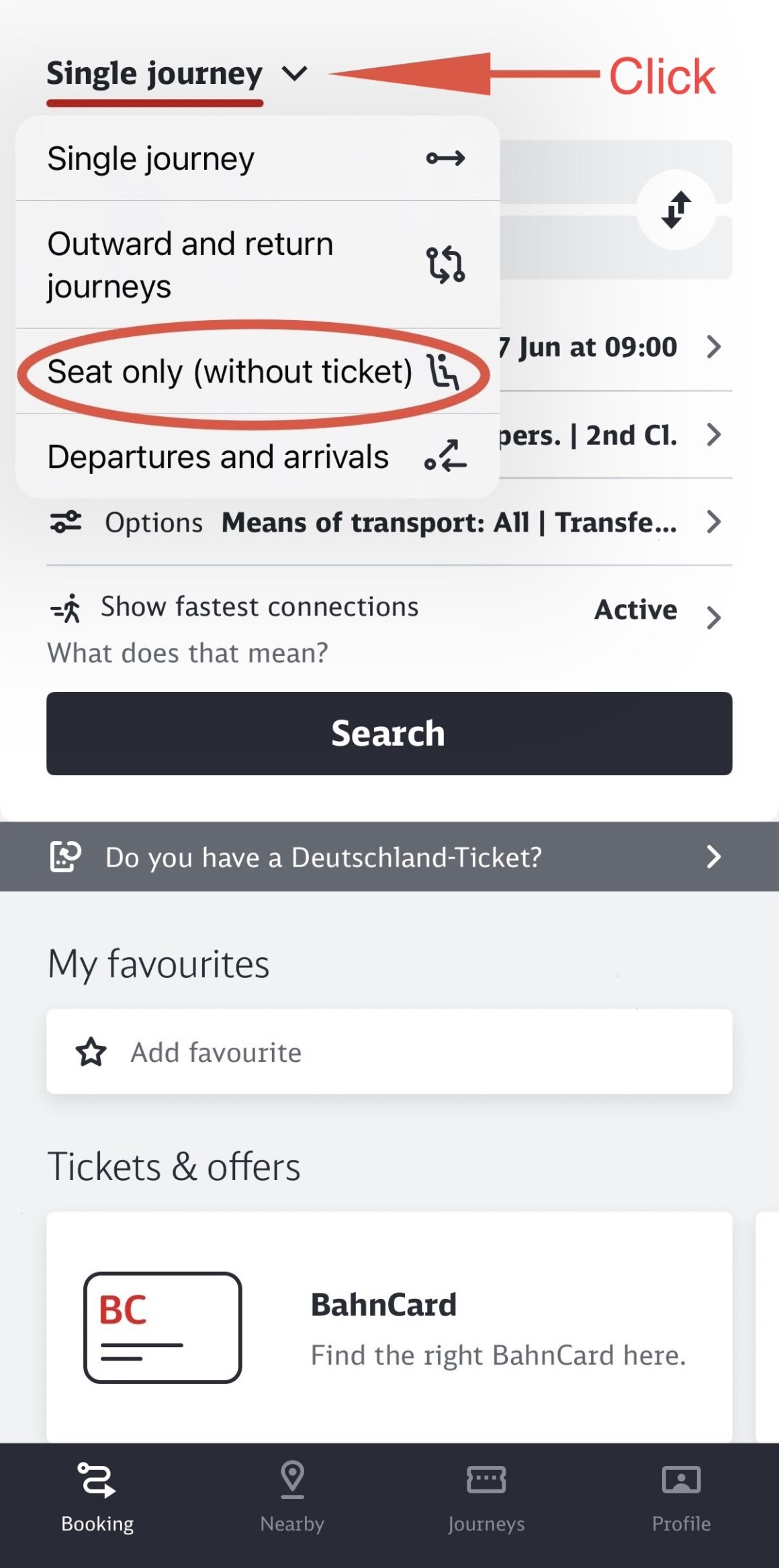
- The cheapest way to get a mandatory seat reservation on ICE and TGV services to and from Germany to France is through the Deutsche Bahn (DB) App.
- Like below, go into the DB app, toggle seat reservation in the top left corner, find your ICE/TGV train, and book your seat on there.
For Countries with Non-mandatory Seat Reservations
- Firstly: if you book your ticket in advance, do not immediately add a seat reservation to your ticket. Wait until your travel date gets closer to reserve seats.
- Once you are 3-5 days out from your travel day, in the app, if you select your ticket — and then journey information, it should tell you the expected capacity of the train.
- If the train is at low capacity: then you shouldn’t have a problem finding a seat. I wouldn’t worry about getting a seat reservation.
- If the train is at medium capacity: you shouldn’t have a problem finding a seat, but the chances you’ll get a window seat are low, and you’ll be sitting next to someone — if you want a guaranteed window seat, make a reservation.
- If the train is at high capacity: you could struggle to find a seat. ESPECIALLY if you are about to embark on a 3+ hour train ride, I would high recommend reserving a seat.
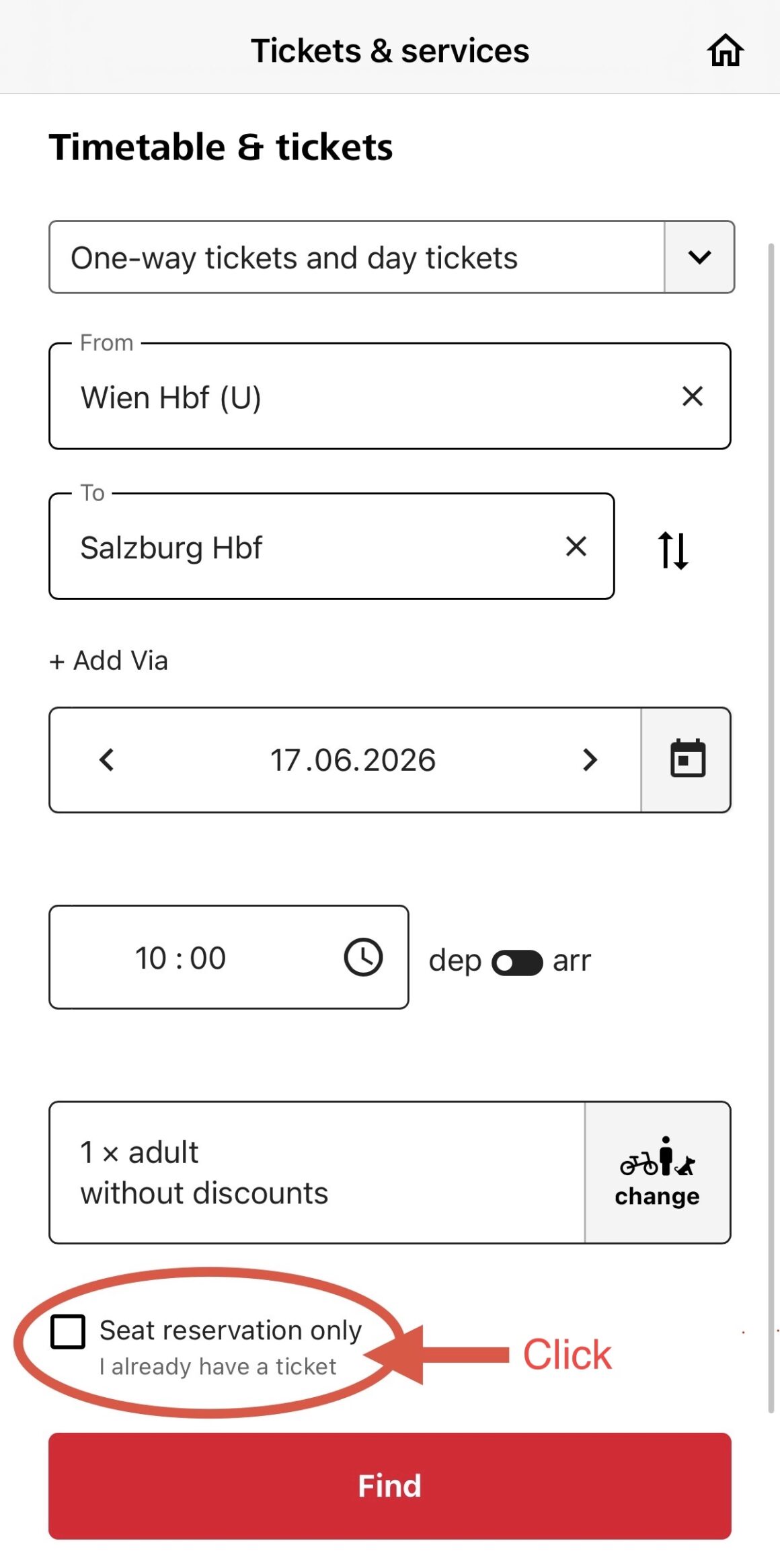
- To Book a Seat Reservation: Simply go onto the national train network app, and set the toggle to “seat reservation only”. Then, find your connection, and book a seat on that train.
- For example:
Luggage Storage on Trains
When travelling on high speed trains, there is normally plenty of luggage storage in the overhead of your seats.
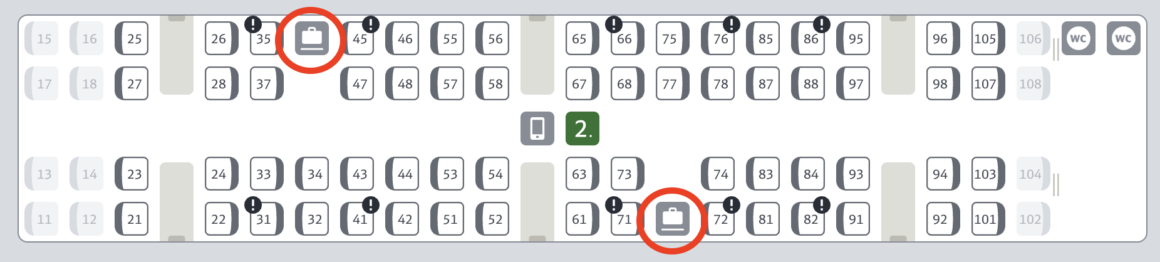
If you are bringing an extra large suitcase – which I would not recommend at all – there are also extra storage compartments normally at the ends of each carriage. If you’re reserving seats, pick seats closest to the end of the carriage.
When travelling in Germany however on the German high speed trains (ICE), most luggage compartments are normally found in the middle of the carriage.
Just remember: If you have oversize luggage ALWAYS choose your seats according to where the luggage racks are located.
Local/Regional trains are unfortunately a different story. The overhead luggage racks can be tight and oftentimes won’t even fit small bags.
If you are hopping on a local/regional train, make sure you hop on at the front or ends of the trains, as there is normally the most amount of space there — or alternatively, look out for the ♿ (wheelchair) symbol. There, you will find space for your large luggage. (Just be sure to stand up and make room for anyone that is in need of a seat).
FlixTrain
Jump to a Section:
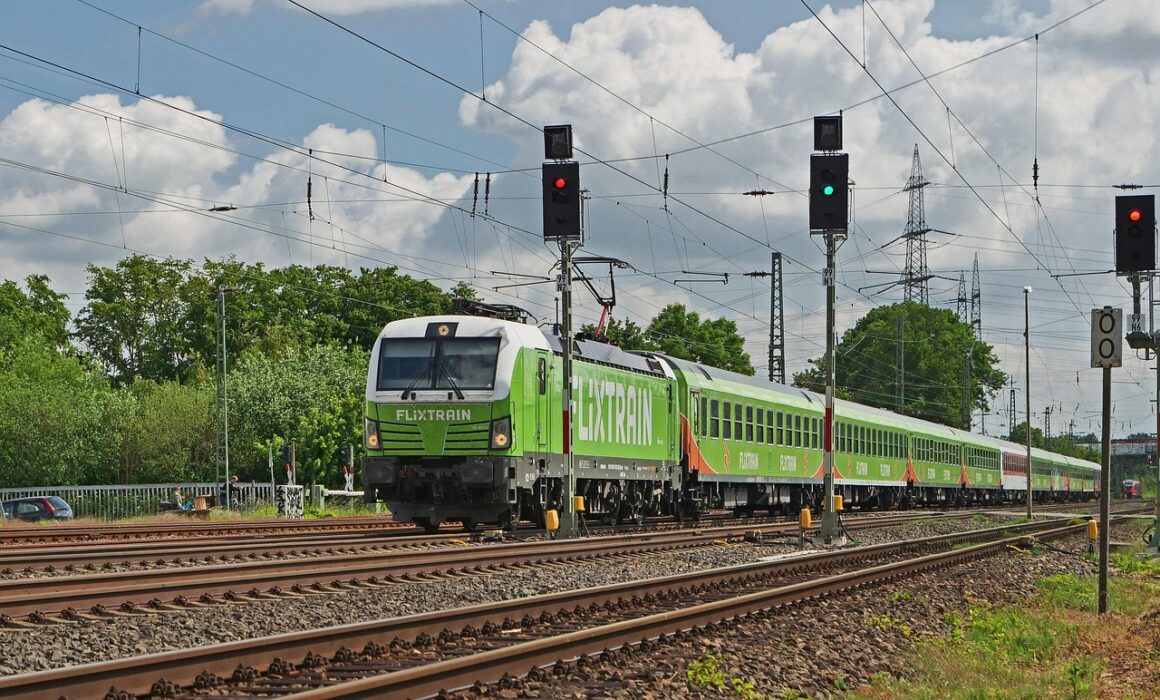
FlixTrain is a service exclusively available in Germany. It offers connections to over 60 destinations across Germany, and prices are a lot cheaper than Deutsche Bahn (DB) – the German national railway operator.
When to Use It?
If you are planning on travelling around Germany, then I would definitely consider using it. With prices sometimes starting as low as €5, it offers considerably lower prices than Deutsche Bahn, and has good connections.
FlixTrain Connections to take Advantage of:
- Hamburg – Bremen – Essen – Düsseldorf – Cologne – Aachen
- Hamburg – Berlin
- Berlin – Hannover – Essen
- Berlin – Leipzig
- Berlin – Dresden
- Berlin – Frankfurt
- Frankfurt – Heidelberg – Stuttgart
- Frankfurt – Heidelberg – Freiburg – Basel Bad (Switzerland)
For more information on routes and connections available, visit: https://www.flixtrain.com/schedule
Negatives

- Unreliability
- FlixTrain frequently encounters long delays and oftentimes cancellations.
- As FlixTrain only provides 1-2 services a day between routes, if your train gets cancelled or delayed, you may get stranded .
- If you book with Deutsche Bahn, when your train gets cancelled or delayed you can simply just hop on the next train available.
- Old Carriages
- Although when I travelled with FlixTrain, I found the carriages to be okay, uncomfortable seats, no air-conditioning, non-functioning toilets and broken power outlets are quite common.
- Especially in the summer, when there is no aircon in the carriages, it can get quite uncomfortable on long journeys.
You Get What you Pay For
Although there are some negatives, you get what you pay for. With some connections being so cheap – compared to DB – it is absolutely worth the risk of the negatives.
If you’re planning on doing some travelling around Germany, I would highly recommend the FlixTrain. Even if you already have a Eurail Pass, if you find a cheap ticket, take the FlixTrain, and save a day on your pass.
FlixBus
Jump to a Section:

If you’re weighing up FlixBus vs trains in Europe, FlixBus is almost always the cheaper option. It’s one of Europe’s largest and most extensive long-distance bus networks, connecting thousands of towns and cities across over 30 countries.
It provides a cheaper alternative to trains – which can sometimes be expensive.
It is incredibly budget friendly, and is extremely easy to navigate finding tickets on its app or on its website.
View all FlixBus route here.
Positives
- The price of the FlixBus is hard to beat
- The FlixBus is oftentimes less than half the price of high speed rail.
- Extensive network all over Europe
- You can go to almost every destination you could imagine across Europe.
- Regular connections across major cities
- Between many major cities you can sometimes find up to 5-10 connections per day.
Negatives
- Sometimes it takes double or triple the time to get somewhere compared to trains
- Although the tickets may be half the price, your trip time sometime triples – and in my opinion – it definitely is NOT worth it.
- When travelling, time is money. The earlier and quicker you can get somewhere, the more time you have to see the city, get checked in and settle down.
- The cheapest option can feel like the smartest — until you’re six hours into a 12-hour bus ride wishing you’d spent the extra money on a train.
- They can be super unreliable – regularly get delayed
- There’s traffic, accidents, country borders – a lot of uncontrollable variables
- Long (even multiple hour) delays are not unusual on FlixBus.
- Trains sometimes get delayed as well, however nowhere near as much as buses.
- Even when booking in advance, the prices sometimes don’t differ enough to make taking the bus worth it
- Sometimes the prices don’t even change much compared to trains when booking 4-8 weeks out.
- If it costs you €15-€20 more to take the train, but you save 4-6 hours, pay the extra money.
- Remember, you’re not just paying for the quicker ride on trains, you’re also paying for the comfort.
- Seats can be small and crammed, with little leg room
- When it comes to comfort, FlixBus doesn’t come close to trains.
- On trains, you get far more legroom and the freedom to walk around and stretch — something you just can’t do on a FlixBus.
When I Would Use the FlixBus

Personally, the convenience and speed of trains is hard to beat. And although they can sometimes be double the price, it is 100% worth it – especially over long distances.
However, there are times you should consider using the FlixBus.
If you are doing a day trip, only travelling short distances or you want to save a day in your Eurail Pass, then sometimes taking the FlixBus is worth it.
The cost of local trains for single trips can be quite high even over short distances.
For Example:
- If I was based in Frankfurt, Germany for a few nights and wanted to do a day trip to Heidelberg:
- The local train will cost me between €18 – €30 one way- travel time approx. 1hr
- FlixBus costs €6 – €8 one way – with a similar travel time of about 1hr.
Conclusion
If you are on a serious budget, and don’t mind losing extra hours and days travelling, then FlixBus might be for you. You can find some seriously good deals getting from one destination to another.
If you’re travelling long distances, and you would like a more comfortable, quicker ride, then the train is by far the better option. Even though trains may be more expensive, it is worth the extra price for the comfort, speed and reliability.
Other Bus Companies/Services
I have never used any bus service other than FlixBus, however there are plenty of other companies out there with lots of good connections and cheap prices. BlaBlacar bus, Eurolines and RegioJet to name a couple.
These bus services however are nowhere near as big or extensive as FlixBus.
To find the best deals on your chosen bus route, use comparabus.com.
Frequently Asked Questions
A youth (ages 12–27) Eurail Global Pass starts at around €239 for 4 travel days within 1 month. Prices vary depending on how many travel days you choose and whether you buy a continuous or flexi pass. Check the latest prices on the official Eurail website.
It depends on your itinerary. If you’re covering long distances (3–4+ hour rides) across multiple countries, a Eurail pass will likely save you money and a lot of stress. If you’re staying in one region and only making short trips, buying individual tickets in advance may be cheaper.
Yes, FlixBus is generally safe and widely used across Europe. The buses are modern, and you’ll book a specific seat. The main downsides are delays, cramped seating, and longer travel times — not safety concerns.
Yes. The UK is one of the 33 countries included in the Eurail Global Pass. However, Eurostar trains (London to Paris/Brussels) require a separate, mandatory seat reservation on top of your pass.
The cheapest way is to book individual train tickets 4–8 weeks in advance through the national railway apps, using youth discount cards where available, and supplementing short trips with FlixBus or FlixTrain. However, booking individual train tickets offers no flexibility compared to the Eurail pass. If you’re travelling for more than a month or covering long distances, a Eurail youth pass often works out cheaper overall.